Noticing More Squinting? How Distance Vision Changes Can Point to Myopia
A child who squints at street signs, moves closer to the television, or says the board at school looks “kind of fuzzy” may not be trying to avoid homework or get attention. They may be giving you one of the earliest visible clues that their distance vision has changed.
Myopia, commonly called nearsightedness, often develops during childhood and can progress through the school years. Near objects may still look clear, so a child can read a book, draw, use a tablet, or build with small pieces without complaint. The trouble usually shows up across the room, across the street, or from the back of a classroom. That mismatch is why myopia can be easy to miss at home, especially in children who do not know what crisp distance vision is supposed to look like.
Squinting is not the only sign, and it is not always caused by myopia. But when parents notice more child squinting distance, especially alongside blurry classroom vision or trouble recognizing faces from afar, it is worth taking seriously. A comprehensive eye exam can clarify what is happening and help protect both day-to-day learning and long-term eye health.
Why squinting makes distance vision seem clearer
Squinting is a practical, instinctive workaround. When the eyelids narrow, they reduce scattered light entering the eye and create a small pinhole effect. That can temporarily sharpen a blurry image, much like peering through a tiny opening can make distant details look more defined.
Children rarely explain it that way. They just discover that squeezing their eyes helps them read the scoreboard, see the teacher’s writing, or make out a person waving from across the playground. Some children squint for only a second at a time, so parents may not catch it right away. Others develop a visible habit, narrowing their eyes whenever they look far away.
In an exam room, I often hear parents say, “I thought she was making a face,” or “He only does it when he’s tired.” Both can be true. Fatigue can make visual strain more obvious. Bright light can also provoke squinting. But repeated squinting at distance, especially in ordinary lighting and during visual tasks, deserves attention.
The reason myopia fits this pattern is straightforward. In a myopic eye, light from distant objects focuses in front of the retina instead of directly on it. The retina receives a blurred image. Up close, however, the focusing demand is different, so a child may function well at near range. That is why a child with myopia can spend an hour reading a graphic novel comfortably but struggle to read a classroom whiteboard ten feet away.
Myopia often appears gradually
Parents sometimes expect vision changes to look dramatic. They picture a child suddenly saying, “I can’t see.” Myopia usually does not announce itself that clearly.
A child may compensate. They sit closer. They copy from a nearby classmate instead of the board. They memorize routines. They avoid games where judging distance matters. They guess at road signs or rely on context. If both eyes change at a similar rate, the child may have no point of comparison. Blurry may feel normal.
I have seen children pass through months of small adjustments before anyone realizes the pattern. One parent noticed her son always chose the same chair near the television, even when the couch was empty. Another noticed her daughter stopped waving back when neighbors greeted her from across the street. In both cases, the children were cheerful, successful, and not complaining of vision problems. Their distance vision had simply slipped below what their environment demanded.
School can reveal myopia faster than home because classrooms ask children to switch constantly between near and far. A child looks down at a worksheet, then up at the board, then back down to write. If the board is blurry, they may lose place, copy incorrectly, or take longer to complete work. This is where blurry classroom vision can be misread as inattention, low confidence, or lack of effort.
Common signs of myopia parents and teachers notice
Not every child shows the same pattern, and some show very few signs. Still, certain behaviors come up often enough that they are useful to recognize.
- Squinting, frowning, or narrowing the eyes when looking at distant objects.
- Sitting close to the television, moving closer to screens, or choosing seats near the front of a room.
- Difficulty reading the board, seeing sports scores, recognizing faces at a distance, or spotting road signs.
- Headaches, eye rubbing, or tired eyes after school or distance viewing.
- Avoiding activities that depend on clear distance vision, such as certain sports or performances.
These signs of myopia do not prove a diagnosis on their own. Allergies, dry eye, binocular vision problems, uncorrected astigmatism, and other visual conditions can also cause squinting or strain. The pattern matters. Squinting mostly at distance, improving when moving closer, and struggling with faraway details all point toward a refractive change that should be measured.
Teachers can be especially helpful observers. They see the child in a visually demanding setting with consistent distance targets. A note from a teacher saying, “She asks to move closer to the board,” or “He copies slowly from the screen,” should not be brushed off. It may be the first practical sign that the child is working harder than necessary to see.
Why children may not complain
Adults often assume that if vision were blurry, a child would say so. In practice, many children do not.
Young children may not have the vocabulary. They may say the board is “small,” “messy,” “too far,” or “shiny” rather than “blurry.” Some think everyone sees the same way. Others avoid mentioning it because they do not want glasses, do not want to be different, or do not want to interrupt class.
Older children may compensate so well that they only notice the problem under specific conditions, such as nighttime driving as a teen, reading subtitles from across a room, or seeing a presentation from the back of a classroom. A student with mild myopia might manage in a small classroom but struggle in an auditorium. Another might see well enough in the morning but complain late in the day after sustained visual effort.
There is also a personality factor. Some children report every discomfort. Others say nothing unless asked directly. A quiet, adaptable child may be the one whose vision change goes unnoticed the longest.
Instead of asking only, “Can you see okay?” it can help to ask concrete questions. “Can you read what your teacher writes from your usual seat?” “Do words on the board ever look fuzzy?” “Do you have to wait until someone reads directions aloud?” The answers are often more useful than a broad yes or no.
The classroom connection
Clear distance vision supports more than reading letters on a board. It affects how quickly a child absorbs instructions, follows demonstrations, watches experiments, reads projected slides, and tracks movement in physical education. Even a small blur can increase effort.
Imagine a child trying to copy math problems from the board. If the plus sign, minus sign, decimal point, or exponent looks unclear, the child may copy the problem incorrectly before solving it. In reading, a blurry word at the front of the room may be guessed from context. In music, a student may miss notes on a distant chart. In sports, a ball may appear a fraction later than it should.
Children with uncorrected myopia may also appear less attentive because they look around, ask neighbors for help, or stop engaging with distance material. Some become frustrated. Others withdraw. A child who once enjoyed school may start saying lessons are boring because the visual task has become tiring.
This does not mean every classroom struggle is vision-related. Learning differences, attention concerns, sleep, stress, and teaching style all matter. But vision is one of the foundational pieces that can be checked directly. When a child has blurry classroom vision, addressing it may remove an avoidable barrier.
Myopia is more than needing glasses
For many families, the first thought after a myopia diagnosis is, “So my child needs glasses.” Often, yes. Glasses or contact lenses can bring distance vision into focus and make school, sports, and daily life easier. But myopia is also tied to the physical growth and shape of the eye.
In most myopia, the eye is longer than ideal from front to back. As the eye lengthens, distance focus becomes blurrier. Higher levels of myopia are associated with increased lifetime risk of certain eye conditions, including retinal detachment, myopic macular changes, glaucoma, and earlier cataract development. Those risks vary by degree of myopia, family history, and individual eye health, but they are part of why eye care professionals monitor progression carefully.
This is not meant to alarm parents. Most children with myopia do well with proper correction and regular care. The point is that myopia deserves more than a quick “glasses or no glasses” decision. If a child’s prescription is changing quickly, the eye doctor may discuss ways to manage progression, not just sharpen vision.
The field of myopia management has grown substantially. Depending on the child, prescription, age, eye shape, lifestyle, and clinical findings, options may include specialized contact lenses, orthokeratology, low-dose atropine drops, or specific spectacle lens designs where available. These are not one-size-fits-all tools, and they require careful discussion with an optometrist or ophthalmologist who works with children. The right choice depends on benefits, risks, cost, maturity, hygiene, and family preferences.
When squinting is not myopia
Squinting is a clue, not a diagnosis. Children squint for optometrist other reasons too.
Bright sunlight can make anyone squint. Allergies can cause irritation that leads to eye squeezing or rubbing. Dryness, though less common in young children than adults, can still occur, especially with heavy screen use or certain environments. Uncorrected astigmatism can blur vision at multiple distances. Hyperopia, or farsightedness, can cause focusing strain, especially up close, though some children compensate for it well. Eye teaming problems can create fatigue, double vision, or avoidance of reading.
Occasional squinting during a sunny soccer game is different from consistent squinting at the board or television. A child who closes one eye in bright light may need evaluation for different reasons than a child who narrows both eyes to read distant text. A child with a red, painful eye or sudden vision change needs prompt medical attention, not routine monitoring at home.
The exam matters because it separates these possibilities. A pediatric vision screening can catch many concerns, but it is not the same as a comprehensive eye exam. Screenings are useful public health tools. They are not designed to evaluate every aspect of focusing, eye health, binocular function, and individual visual demands.
What happens during an eye exam for suspected myopia
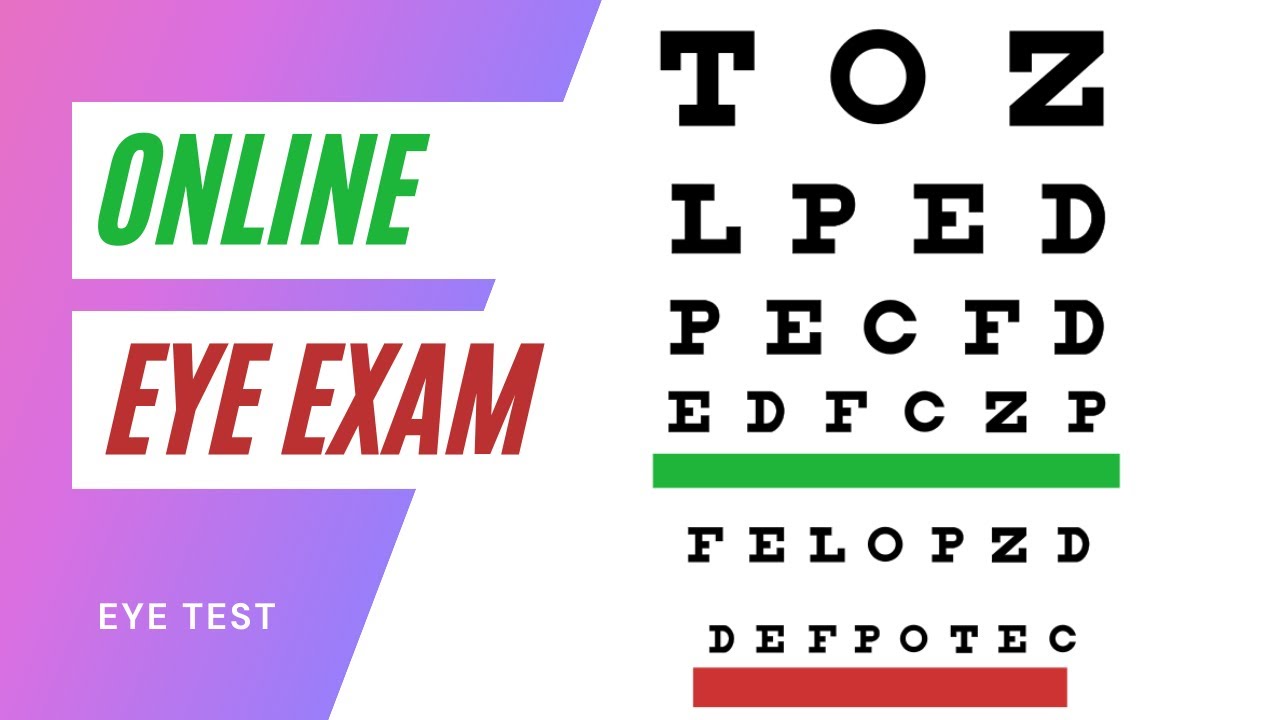
A good exam for a child with possible myopia is usually calm, structured, and age-appropriate. The doctor or technician will measure visual acuity, often one eye at a time, using letters, numbers, pictures, or matching symbols depending on the child’s age. They will check how the eyes focus and whether lenses improve clarity.
Refraction is the part that determines the prescription. Some children are very good at answering lens choices. Others are uncertain or eager to please. Eye care professionals account for that. Objective instruments can estimate the prescription, and in many pediatric exams, dilating drops or cycloplegic drops may be used to relax focusing and get a more accurate measurement. This is especially important when a child’s focusing system is active enough to mask or distort the true prescription.
The exam should also include an assessment of eye alignment, eye movement, pupil responses, and ocular health. Depending on the practice and the child’s risk profile, the doctor may measure eye pressure, examine the retina, or document axial length, which is the front-to-back length of the eye. Axial length can be useful in monitoring myopia progression, though availability varies.
Parents should bring context. Tell the doctor when the squinting started, whether it is worse at school or at night, whether either parent is nearsighted, and whether the child has headaches, double vision, eye rubbing, or recent academic changes. Mention screen habits and outdoor time, not because these alone diagnose myopia, but because they help build a complete picture.
How often vision should be checked
Children typically receive vision screenings at certain well-child visits and through school programs, but schedules vary by location and age. A child who fails a screening should have a comprehensive eye exam. A child who passes a screening but has persistent symptoms should also be examined. Passing a screening does not guarantee that vision is comfortable, stable, or fully corrected for the child’s needs.
If a child already has myopia, follow-up timing depends on age, prescription, rate of change, and treatment plan. Many eye doctors monitor progressing childhood myopia every six to twelve months. Some myopia management treatments require more frequent visits at the beginning to check fit, response, side effects, or adherence.
There are also moments when it is wise to schedule eye exam sooner rather than waiting for the next routine check. New squinting, complaints about the board, headaches linked to visual tasks, a sudden drop in school performance, or a teacher’s concern all justify a visit. If vision changes suddenly, if there is eye pain, flashes, floaters, a curtain-like shadow, or trauma, care should be urgent.
Screens, outdoor time, and the practical reality of modern childhood
Parents often ask whether screens caused their child’s myopia. The honest answer is more nuanced than a simple yes or no.
Myopia risk is influenced by genetics and environment. Children with one or two myopic parents have a higher likelihood of developing myopia. Research also supports a relationship between time outdoors and reduced risk of developing myopia in children. Near work, eye doctor exam including reading and screen use, may play a role, particularly when sustained for long periods without breaks, although the details are complex and not every study finds the same degree of effect.
The practical guidance is still sensible. Children benefit from daily outdoor time when weather, safety, and schedules allow. They also benefit from breaks during sustained near work. A child does not need to avoid books, schoolwork, drawing, or screens entirely. The goal is balance, visual comfort, and healthy routines.
Many families find it realistic to build outdoor time into existing patterns rather than treating it as another medical assignment. Walking to school, playing outside after homework, weekend sports, playground time, or even reading outdoors can help. For near work, breaks can be informal. Looking across the room or out a window every so often gives the focusing system a change in demand. The commonly mentioned 20-20-20 rule, looking about 20 feet away for 20 seconds every 20 minutes, is easy to remember, though younger children may need adult reminders.
Screens also introduce practical issues beyond myopia risk. Children may hold phones very close, use devices in dim rooms, or continue long after their eyes feel tired. Increasing font size, improving lighting, keeping a reasonable working distance, and pausing between tasks can reduce strain. None of these replaces an exam if distance vision is blurry, but they support more comfortable visual habits.
Glasses, contacts, and the child who does not want them
A child’s reaction to glasses can range from excitement to tears. Some are relieved when the world snaps into focus. Others worry about teasing, sports, appearance, or losing them. The parent’s response matters. Calm confidence helps. So does involving the child in frame choice within sensible boundaries.
For younger children, durability and fit often matter more than style alone. Frames should sit properly on the bridge, not slide constantly, and allow the child to look through the optical center of the lenses. Lenses should be appropriate for the prescription and lifestyle. A spare pair can be invaluable, especially for children who need glasses full time.
Contact lenses can be an option for some children, including preteens, when maturity and hygiene are appropriate. Age alone is not the only deciding factor. I have seen responsible ten-year-olds handle contacts beautifully and older teens struggle with care routines. Sports, prescription level, motivation, and parental support all matter. Specialty contact lenses used for myopia management require even more commitment and follow-up.
The biggest mistake is treating correction as optional when the child needs it for clear distance vision. Some parents worry that wearing glasses will make the eyes “dependent” or worsen myopia. Correct glasses do not weaken the eyes. They focus light properly so the child can see. Under-correction is generally not a strategy parents should attempt on their own, and it may be counterproductive in some cases. Prescription decisions should be made with the eye doctor.
What parents can watch for at home
Home observations are valuable because they capture real behavior, not just test performance. A child may read the eye chart well on a good day but still struggle in the back of a classroom. Parents can notice patterns across settings.
Pay attention to where your child chooses to sit during movies or television. Notice whether they recognize people at a distance as quickly as siblings do. Listen for comments such as “I can’t see that far,” “It’s too small,” or “I need to go closer.” Watch whether squinting increases during evening activities, night driving practice for teens, or sporting events.
It is also useful to compare behavior over time rather than against a perfect standard. A child who has always sat close to the television may simply prefer that spot, though it still may be worth checking. A child who suddenly moves closer, starts squinting, or avoids distance tasks has shown a change. Change is often the more important clue.
If your child already wears glasses, new squinting can mean the prescription has shifted, the glasses are scratched, the frames are misaligned, or the child is not wearing them when needed. Children grow, frames bend, and prescriptions can change within a school year. Do not assume the current pair is still doing its job just because it worked when first prescribed.
A simple way to prepare before you schedule eye exam
A little preparation can make the appointment more productive. You do not need to perform home vision testing, and you should not rely on online charts to make decisions. Instead, gather practical information.
- Ask your child where they sit in class and whether the board, projector, or screen ever looks blurry.
- Note when squinting happens, such as during television, sports, car rides, or schoolwork.
- Bring any current glasses, even old or broken pairs, so the prescription and wear pattern can be reviewed.
- Write down family history of nearsightedness, eye disease, lazy eye, eye turns, or childhood glasses.
- Mention medications, headaches, recent illnesses, eye injuries, or teacher concerns.
These details help the doctor interpret findings in context. A prescription number is important, but it is not the whole story. The goal is to understand how the child uses vision throughout the day and whether treatment should be routine correction, closer monitoring, myopia management, or evaluation for another condition.
The role of family history
Family history is one of the strongest clues in childhood myopia. If one parent is nearsighted, a child’s risk is higher than average. If both parents are nearsighted, the likelihood increases further. The exact risk varies across studies and populations, and environment still matters, but family history should sharpen attention.
Parents sometimes forget to mention their own vision history because glasses feel ordinary. It helps to tell the eye doctor when you first needed glasses, whether your prescription progressed quickly, and whether you have high myopia. If you know your approximate prescription, share it. A parent with mild myopia that stabilized in high school presents a different context than a parent with a high prescription that changed throughout childhood.
Siblings matter too. If an older child developed myopia at age eight, a younger sibling who starts squinting at seven should be checked promptly. That does not mean the same path is guaranteed, but it raises suspicion.
Why early detection changes the experience
Early detection does not mean every case of myopia can be stopped. It does mean the child can see clearly sooner, and the family can make informed decisions.
A child who receives the right correction may become more comfortable in class almost immediately. Parents often describe the ride home after glasses pickup as a revelation. Children read signs aloud, notice leaves on trees, or comment on details they had not seen before. Those moments are memorable, but they also carry a quiet sadness for some parents who wonder how long the child was struggling. The answer is often unknowable. What matters is catching it now.
Early diagnosis also gives the doctor a baseline. If the prescription changes over the next six months or year, that change can be measured. Without a baseline, families are left guessing. For a child at higher risk of progression, timing matters because some management approaches work best when started while myopia is still actively changing.
When school performance and vision overlap
Vision is not the only reason a child may fall behind, but it is one of the most correctable barriers. If a child misses information from the board, homework instructions may be copied incorrectly. If they cannot see demonstrations, they may appear unprepared. If they are embarrassed to ask for help, the problem compounds.
One subtle sign is inconsistency. A child may do well on assignments completed at home but poorly on work copied from the board. They may understand math concepts but make transcription errors. They may read books comfortably but resist activities involving projection screens or distance viewing. That split between near success and distance difficulty fits myopia more closely than many parents realize.
Teachers can help by moving the child closer temporarily, providing printed notes, or checking copied assignments while the family awaits an exam. These accommodations are not substitutes for care, but they can reduce frustration. If glasses are prescribed, teachers should know when the child is expected to wear them. Some children need them mainly for distance. Others benefit from full-time wear. Clear instructions prevent the child from deciding based on convenience or peer pressure.
The emotional side of a first prescription
For adults, a prescription may feel routine. For a child, it can feel like a label. Some worry they will look different. Some fear classmates will comment. Others are bothered by the sensation of frames, reflections, or the edge of the lenses.
It helps to normalize the adjustment period without making it dramatic. New glasses can feel strange for a few days. Depth perception may feel different, especially with a stronger first prescription or astigmatism correction. The child should be encouraged to wear them as directed and report persistent discomfort. If glasses slide, pinch, create dizziness that does not settle, or seem blurry after a reasonable adjustment period, the optical shop or eye doctor should recheck fit and prescription.
Children are more likely to wear glasses that feel comfortable and suit their taste. A sturdy frame in a color they like can make a difference. So can matter-of-fact language. “These help your eyes focus far away” is often better than “Your eyes are bad.” The words adults choose can shape whether correction feels like support or stigma.
Do not wait for the annual check if the pattern is clear
If your child is squinting at distance, moving closer to see, or reporting blurry classroom vision, waiting months for the next routine screening may prolong an avoidable problem. A comprehensive eye exam is the appropriate next step. Even if the result is not myopia, the exam can identify other causes of blur, strain, or eye discomfort.
The most important thing parents can do is respond to patterns. One squint in bright sunlight is ordinary. Repeated squinting at the board, television, stage, field, or road signs is a signal. Children depend on adults to notice what they may not be able to explain.
Clear distance vision supports learning, confidence, safety, and participation. When it changes, children often adapt quietly. Careful observation, timely evaluation, and practical follow-through can make their world sharp again.
Phone:
(657) 445-2160
Website:
opticoreyegroup.com/brea-ca.html
Opticore Optometry Group, PC - BREA, CA
2500 E Imperial Hwy, Ste 196,
Brea,
CA
92821